
Posts by pixadmin

How to Spot Fake Pokemon Cards: The Ultimate Guide for Singapore Collectors

Table of Contents
Fake Pokémon cards have cost collectors in Singapore over S$135,000 in recent scams. Consequently, understanding how to spot counterfeits has become essential for protecting both wallets and collections.
The Pokémon Trading Card Game ranks among the most actively traded collectibles globally, with individual cards selling for hundreds or even thousands of dollars. However, counterfeit cards can destroy a collection’s value, ruin trades, and lead to disqualification from official tournaments.
This guide teaches collectors how to identify fake Pokémon cards, including spotting fake Japanese Pokémon cards and understanding the key differences between real and fake cards. Readers will learn practical verification techniques and safe buying practices to shop with confidence in Singapore’s market.
The Difference Between Real and Fake Pokemon Cards
Authentic Pokémon Trading Card Game cards come with clear, recognisable qualities that make them easier to identify once you know what to look for. With a bit of awareness, collectors can quickly spot the differences and protect their collections with confidence.
One of the first things you will notice is the physical feel. Genuine cards have a consistent, high-quality finish that feels firm yet smooth in hand. In contrast, counterfeit cards often feel noticeably off, either too thin and papery or overly stiff due to lower-quality materials. This makes touch a surprisingly useful first check.
Print quality is another reliable indicator. Real Pokémon cards feature sharp text, clean lines, and well-balanced colours. When you become familiar with authentic cards, it becomes much easier to recognise inconsistencies such as blurry text, incorrect fonts, or unusual colour tones on fake versions.
The light test can also provide helpful clues when used alongside other checks. Authentic cards contain a dark inner layer that blocks most light, while many fake cards appear more transparent. Although not a standalone method, it adds another layer of verification when examining a card.
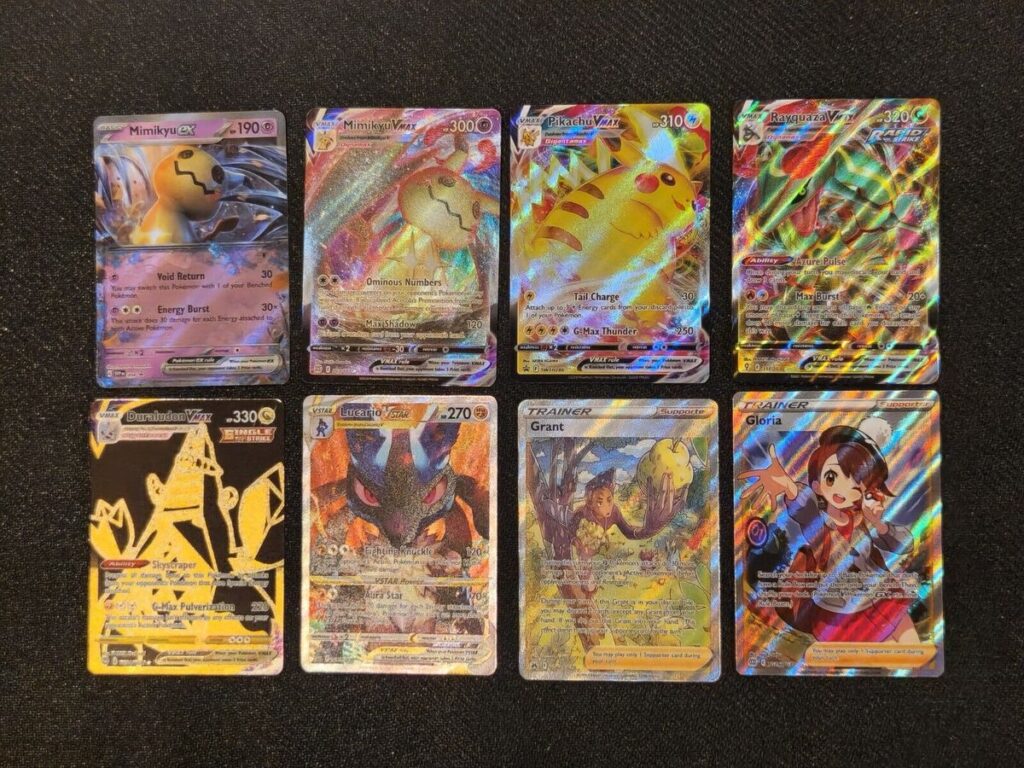
Holographic cards offer even clearer visual cues. Genuine holo cards display vibrant, dynamic patterns that shift naturally under different lighting angles. Once you have seen a few real examples, the difference becomes obvious compared to counterfeit versions, which often look flat or less detailed.
Finally, the card back is a great place to confirm authenticity. Real cards feature a rich blue colour and a well-defined swirl pattern around the Poké Ball. With experience, even small inconsistencies in colour or design become easy to spot.
By learning these simple checks, collectors can approach every purchase with greater confidence and enjoy building their Pokémon card collections safely.
Common Sources of Fake Pokemon Cards in Singapore
Counterfeit Pokémon cards can appear across multiple channels in Singapore, but with the right awareness, collectors can navigate these spaces safely. O Second-hand marketplaces are one of the more common environments where this issue can occur, with hundreds of reported cases and losses exceeding S$1 million in recent years. According to a Singapore Police Force advisory on e-commerce scams involving trading cards, scammers often move conversations off-platform to WhatsApp or Telegram, which is a common warning sign to watch out for.
Physical marketplaces such as flea markets and pop-up stalls can also present risks, as sellers may operate without formal verification. While not all sellers are problematic, buyers should take extra care to inspect cards closely before making a purchase.
E-commerce platforms like eBay, Amazon, and Shopee may feature listings with unusually low prices or unclear product images. Deals that seem too good to be true often are, especially when booster boxes are priced far below typical market value.
Collectors should also be cautious when purchasing unsealed products. Loose booster packs or opened boxes, including Japanese imports, may have had valuable cards removed before resale. Choosing sealed products from trusted sellers helps reduce this risk significantly.
Pre-order deals are another area where extra care is needed. While many legitimate sellers offer pre-orders, scams can occur when full payment is requested upfront without proper verification. Sticking to reputable retailers and avoiding rushed decisions can help collectors secure genuine products with peace of mind.
By understanding where risks are more likely to appear, collectors in Singapore can make smarter buying decisions and continue enjoying the hobby with confidence.
Protecting Your Collection: Verification and Safe Buying Practises
Professional grading services offer highly reliable authentication for high-value cards. PSA authenticates cards through rigorous examination and maintains a database where collectors can verify certification numbers against official records. Beckett Grading Services provides similar authentication with a long-standing reputation in collectibles grading. Certified Guaranty Company offers consistent third-party assessments, whilst TAG Grading uses AI-assisted grading with detailed scoring reports.
Secure payment methods significantly reduce scam exposure. Cash on delivery or in-person meetups allow buyers to inspect items before payment, helping to avoid pre-order risks. PayPal Goods and Services offers buyer protection with refund mechanisms, whereas bank transfers and friends-and-family payments typically provide no recourse and should be approached with caution.
Seller verification requires multiple checks. Examine seller ratings carefully, paying attention to unusual or repetitive review patterns. Request detailed, high-resolution photographs of card fronts, backs, and edges, as this helps identify inconsistencies early. Sellers who refuse photo requests should be treated with caution. Purchasing from established retailers with verifiable business details further reduces risk.
The Singapore Police Force also advises several protective measures. These include enabling ScamShield features, using the ScamShield Helpline at 1799 for verification, and reporting suspicious listings on platforms such as Carousell. Buyers are also encouraged to set transaction limits on internet banking accounts and avoid moving transactions off-platform, where protections may be reduced.
Where to Buy Authentic Pokémon Cards in Singapore
After learning how to spot fake cards and avoid common scams, choosing a trusted seller becomes the next important step. Buying from established retailers helps reduce the risk of counterfeits and ensures better transparency in product sourcing and handling.
Sakura Play offers collectors in Singapore a more reliable way to purchase authentic Pokémon cards. By sourcing genuine products and providing a clear buying experience, collectors can build their collections with greater confidence and peace of mind.
Conclusion
Collectors in Singapore can protect their collections with greater confidence by learning how to spot counterfeit cards and avoid common scam tactics. Examining card quality, verifying sellers, and using secure payment methods all play an important role in reducing risk.
Authentication also does not require expert-level knowledge. Simple checks such as print quality, card feel, holographic details, and buying from trusted sources can go a long way in helping collectors keep their Pokémon card collections authentic and valuable over time.
FAQs
Authentic Pokémon Trading Card Game cards have consistent print quality, clear text, and a firm, high-quality feel. Check for sharp details, balanced colours, and a well-defined card back. Holographic cards should show dynamic, shifting patterns, while fake cards often look dull or flat. The light test can help, but it should not be used alone.
Fake cards often show blurry text, incorrect fonts, and uneven colours such as overly dark or purplish tones. Printing may appear smudged, and the card back can look faded or poorly detailed. Holographic effects are usually less vibrant or appear static compared to genuine cards.
Counterfeit cards commonly appear on platforms like Carousell, Facebook Marketplace, Shopee, and AliExpress. They are often sold by unverified sellers, especially in listings with unusually low prices or unclear photos. Buyers should also be cautious with loose packs and unsealed products.
No, the light test should only be used as a supporting check. While real cards contain a dark inner layer that blocks most light, some fakes can pass this test. It is best to combine it with other checks such as print quality, texture, and holographic details.
Buy from trusted retailers or verified sellers whenever possible. Use secure payment methods such as in-person meetups or PayPal Goods and Services. Avoid bank transfers or off-platform payments, and always request clear photos before purchasing. For high-value cards, consider authentication from services like Professional Sports Authenticator, Beckett Grading Services, or Certified Guaranty Company.

Booster Box vs Single Pack: Which Is the Smarter Buy for Pokemon TCG Collectors?
The booster box vs single pack debate is basically the collector’s version of Vegas, but with shinier cardboard. You can drop a few hundred on booster boxes chasing that one card you have been dreaming about, heart racing with every rip… or you can skip the suspense and just buy the card directly for a known price.
And here is the reality check: statistically, only around 1 in 36 packs contains a chase card with real value. Sure, some cards smash past the $1,000 mark, and the most expensive Pokémon card ever sold reportedly hit a wild $5,275,000. That is the kind of headline that fuels the chase and keeps collectors cracking packs “just one more time”.
So is it better to buy booster boxes or single packs? It depends on what you want from the hobby.
This article breaks down booster box vs single packs in a practical, no-regret way, covering pull rates, cost efficiency, and the true trade-off between the adrenaline rush of opening packs versus the calm certainty of buying exactly what you want. By the end, you will have a simple decision framework to help you spend smarter, chase with intention, and actually feel good about what you buy.
Breaking Down the Basics: Booster Boxes vs Single Packs Explained
What You Get in a Booster Box
English booster boxes contain 36 packs from a single expansion. Each pack includes 10 cards: 4 commons, 3 uncommons, and 3 foils, with at least one rare or higher. Booster boxes offer better bulk value, typically priced 10-15% lower per pack compared to buying singles separately.
What You Get in a Single Pack
A single pack is just one sealed booster pack bought on its own. You are still opening 10 cards and hoping the pulls go your way, you are simply not buying the full booster box.
Singles are individual cards bought directly from a shop or marketplace, like purchasing the exact Charizard, Trainer, or Secret Rare you want. No opening, no surprises, just a straight purchase.
That difference is important in the booster box vs singles debate because single packs are still pack-opening, while singles are targeted buying.
Understanding Pull Rates and Probability
Hit rates hover around 20-30% per pack in Scarlet & Violet sets, meaning 1 in 3-5 packs yields something beyond standard rares. Special Illustration Rares appear roughly 1 in 80-90 packs, whilst Hyper Rares surface approximately 1 in 100-150 packs. These probabilities remain consistent whether purchasing booster boxes or single packs.
Why Different Collectors Choose Different Paths
Set completionists favour booster boxes for broader card coverage. Competitive players prioritise singles for deck-building efficiency. Collectors seeking emotional satisfaction choose boxes, whilst those preferring control select singles.
Is It Better to Buy Booster Boxes or Single Packs vs single: The Honest Answer
Choosing between booster box vs single packs vs single requires matching your purchase to your primary objective.
If Your Goal Is Pure Excitement
Booster boxes deliver unmatched thrill through pack-opening rituals. The anticipation of multiple reveals justifies the premium cost for collectors who value experience over efficiency. Singles eliminate this emotional component entirely.
If Your Goal Is Completing a Set
One booster box typically provides 60-80% of a master set, covering most commons, uncommons, and standard rares. However, completing ultra rares demands 2-3 boxes, after which singles become necessary to avoid duplicate pulls.
If Your Goal Is Building a Competitive Deck
Singles reign supreme for deck construction. Buying specific Trainer and Item cards is usually far cheaper than relying on random pulls. Competitive players skip the uncertainty and get tournament-ready cards immediately.
If Your Goal Is Long Term Value or Investing
A sealed booster box can go up in price over time, especially a few years after it stops being printed, because fewer unopened boxes are left. Singles can also rise, but their prices change much faster. A card might spike because it becomes popular in competitive play, then drop again when the meta changes or a reprint happens.
The Math Behind Cost Per Desired Card
On SakuraPlay, Pokémon booster boxes typically range from around S$110 to S$156, depending on the set. Booster packs (single packs) are usually priced around S$12 to S$16 each. And then there are singles, which are individual cards sold separately at their own listed prices.
If you are chasing a specific card, the real question is this: how many packs would you realistically need to open before you hit it? Even at S$12 to S$16 per pack, the cost can add up quickly, and there is no guarantee you will pull the exact card you want.
That is why, when you already know your target card, buying the single directly is often more cost-efficient. You pay the market price upfront instead of spending on multiple packs and hoping the odds land in your favour.
Boxes suit collectors seeking volume, set-building foundations, or sealed investment holdings. Direct purchase eliminates randomness, controls budgets, and guarantees desired cards.
Making Your Decision: A Practical Framework for Smarter Purchases
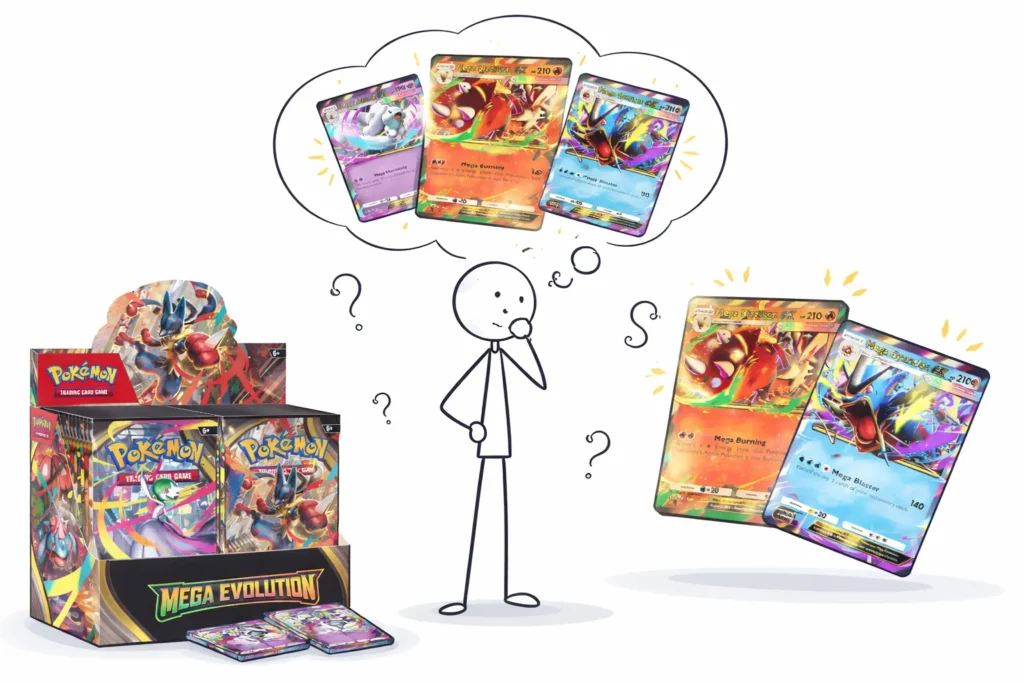
Making smarter purchases requires deliberate evaluation rather than impulsive clicking.
Step 1 Define Your Primary Goal
Collectors must identify whether they’re building competitive decks, completing sets, seeking entertainment, or operating within budget constraints. Competitive players benefit most from singles. Set builders require a mix of both. Budget-conscious collectors should prioritise singles.
Step 2 Decide Between Excitement or Certainty
Singles provide certainty whilst booster boxes and single packs offer surprise. This choice reflects personal values in collecting. Those calculating return on investment approach pack opening incorrectly. In other words, treat it as entertainment spending, similar tocinema tickets or video games.
Step 3 Set a Budget You Are Comfortable Losing
Decide beforehand exactly how much to spend, regardless of results. Write it down. Once this amount depletes, stop opening. Only allocate money affordable for pure entertainment.
Step 4 Consider a Hybrid Strategy A Quick Self Check Before You Click Buy
Purchase 1-2 booster boxes for the opening experience, then switch to singles for remaining needs. This maintains budget control coupled with enjoyment. Wait several weeks after set releases as singles prices typically drop when supply increases.
Conclusion
Ultimately, the booster box vs single pack debate resolves itself once collectors clarify their goals. Whether seeking the emotional thrill of pack opening or the strategic certainty of specific cards, smarter purchases stem from understanding one’s priorities beforehand. The framework outlined here helps prevent regret-driven spending by aligning budget with objectives. Buy at Sakura Play armed with this knowledge and make collecting decisions that genuinely satisfy rather than simply spend.
FAQ
It depends on your goal. Booster boxes are better for collectors who enjoy opening packs and want broader set coverage, while single packs cost less upfront but offer less overall value per pack. If you are chasing a specific card, buying the single directly is usually the smarter option.
Yes, booster boxes are usually more cost-effective on a per-pack basis. They often come at a lower average cost per pack compared to buying packs individually, which makes them more attractive for collectors opening larger quantities.
If you already know which card you want, buying singles is often the better choice. It removes the guesswork, helps control spending, and gives you the exact card without relying on pull rates or luck.
Booster boxes can be a strong starting point for set completion because they help you collect a large portion of commons, uncommons, and regular rares. However, most collectors still need to buy singles later to complete harder-to-pull cards.
A practical strategy is to buy a booster box if you enjoy the opening experience, then switch to singles for specific cards you still need. This gives you a balance of fun, budget control, and collection efficiency.